
Aerodyne Airlock Valves
The Alternative to Rotary Valves!

Aerodyne manufactures a variety of airlocks for dust collectors. Airlocks are required on dust collectors for the dust collector to operate correctly. If an airlock is not mounted on the dust collector, air will leak in (vacuum system) or blow out (pressure system). If air is leaking in, this will lower the airflow being collected at the pickup points and it could increase the chances of dust re-entrainment. If air is blowing out, dust will be blown out of the collector causing a mess on the floor around it.
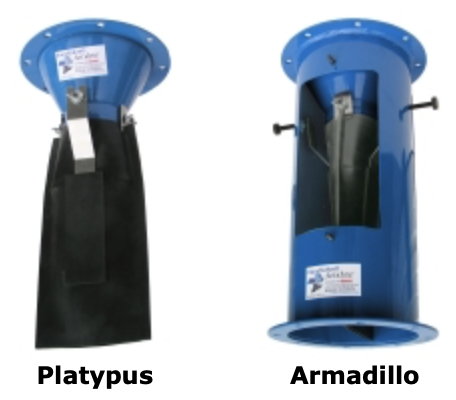
Aerodyne Vacu-Valve® Platypus and Vacu-Valve® Armadillo
The open-construction Platypus and the closed-construction Armadillo trickle valves are the most economical ways to manage dust discharged from bag filters or cyclones under negative pressure. The fitted duckbill sleeve adjusts to the desired vacuum and material is continuously discharged. It requires no controls, lubrication or power supply and easily handles abrasive materials. This trickle valve can be used in higher temperature applications as well. The Vacu-Valve® dust discharge trickle valve is available at a fraction of the cost of the rotary airlock valves it replaces.
See complete product information about the Aerodyne Vacu-Valve® Platypus and Vacu-Valve® Armadillo.
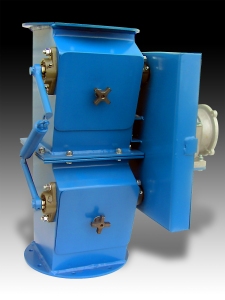
Aerodyne GatorGate™ Double-Dump Valve
The GatorGate Double-Dump valve feeds and moves chunky or fibrous material that would jam ordinary rotary valves and is durable enough to move abrasive material. The GatorGate valve uses tandem gates to maintain proper pressure above and below the valve and has a reinforced closure mechanism to prevent air seepage. This double flap valve can be configured to operate using air or electricity and requires little maintenance.
See complete product information about the Aerodyne GatorGate™ Double-Dump Valve.
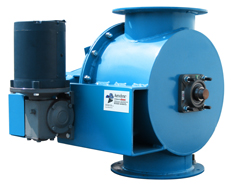
Aerodyne High Capacity Rhino Rotary “R” Valve™
The Aerodyne High Capacity Rhino Rotary “R” Valve is designed for continuous discharge of free-flowing, low-abrasive dry solids in gravity flow or low-pressure systems. Widely used in applications such as the bottom of dust collector hoppers, the Rhino Rotary “R” Valve’s steel plate construction gives it a distinct advantage in quality and flexibility over cast valves.
See complete product information about the Aerodyne High Capacity Rhino Rotary “R” Valve™.
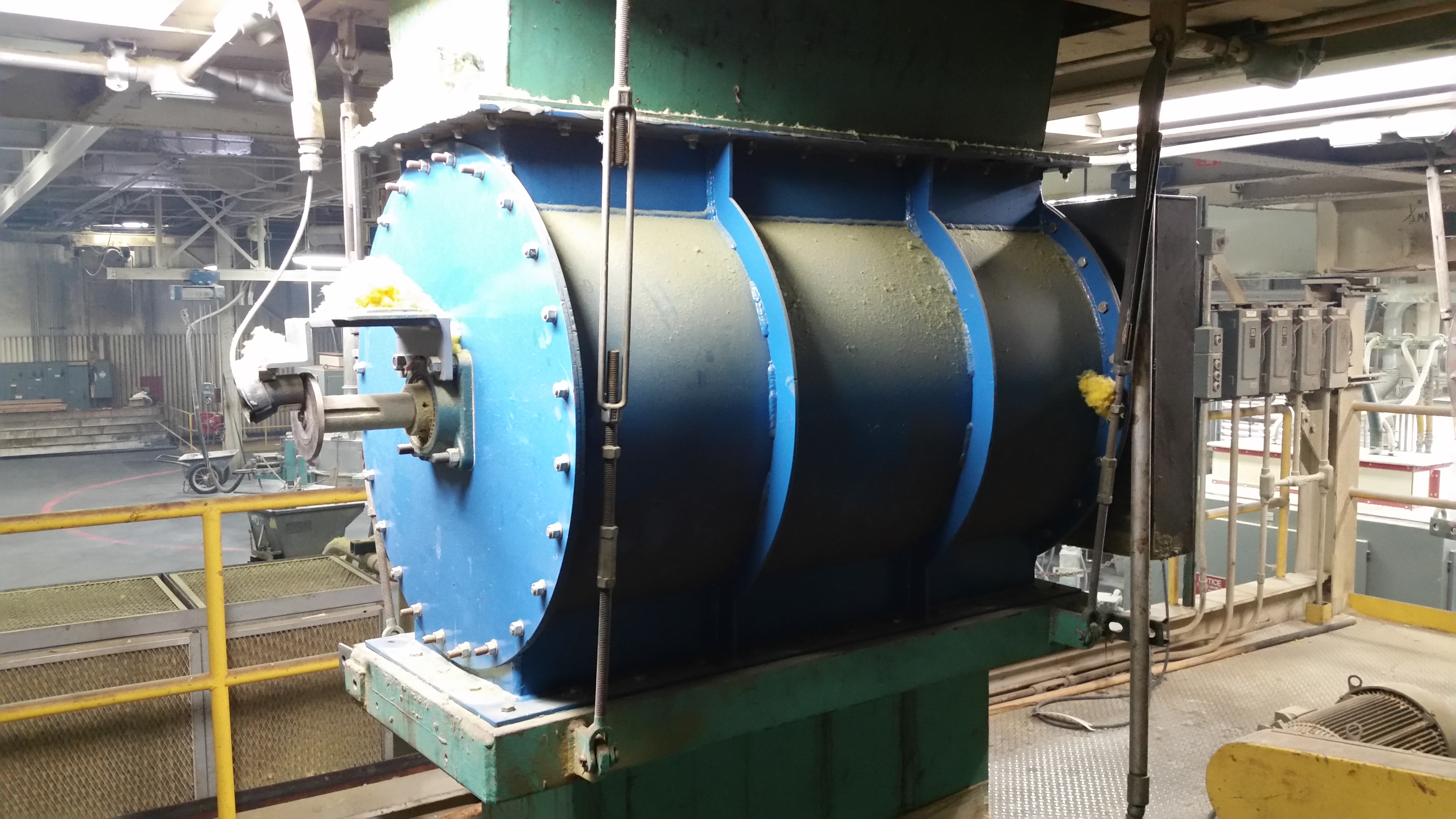
Mighty Whopper Valve™
The Aerodyne Mighty Whopper Valve is designed for continuous discharge of highly-abrasive dry solids in gravity flow or low-pressure systems. Widely used in applications such as the bottom of dust collector hoppers in the insulation industry, the Mighty Whopper Valve’s steel plate construction and robust rotor gives it a distinct advantage over standard rotary valves.
See complete product information about the Aerodyne Mighty Whopper Valve™.
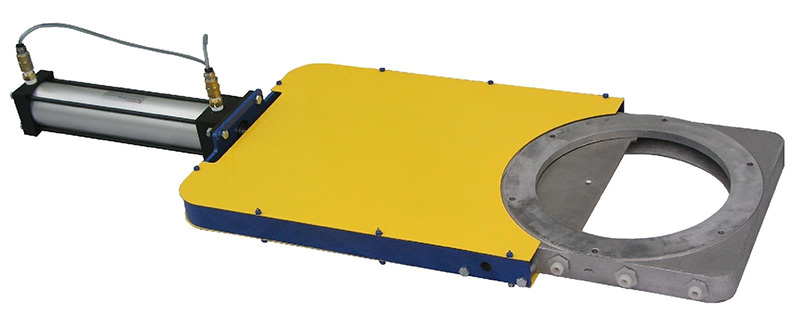
KG Valve
A knife gate valve is used to control flow in a bulk-material handling system, either in the line of flow or at the point of discharge. Using a linear motion, a blade advances until the passage is closed, or it withdraws until the passage is open. In the closed position, the knife gate valve is designed to seat tightly and prevent the loss of positive or negative pressure of the system. The system must be able to tolerate a loss of pressure when the valve is in the open position.
See complete product information about the Knife Gate Valve.